Cutting simulation

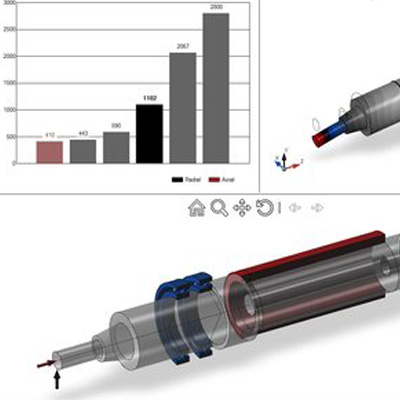
Cutting simulation An accurate representation of the surface texture and characteristic values after machining can be achieved using standard models for milling, turning or grinding and individual models of special processes. The individual forces and displacements can also be established in this way.

Continue reading


Displacement measurement

Displacement measurement The displacement of machine components under the weight of workpieces or due to the loads in processes, the overshoot and the repeatability of dynamic positioning of the axes can be monitored relative to the machine or relative to the floor of the hall. This monitoring can be carried out both in the short-term […]

Continue reading


Temperature measurement

Temperature measurement Precise measuring of temperatures, while a machine is in use, are carried out over an appropriate period of time to determine the accuracy of the machine. This is done using thermocouples in all major components of the machine. Possible impacts can thus be assessed directly in combination with displacement measurements.

Continue reading


Acoustic / noise measurement

Acoustic / noise measurement The noise measurement equipment provides the average noise pressure level and sound energy level at standstill, idling and in operation according to current industrial standards. The measurement via microphones, as well as structure-borne sound measurements allow for measuremen a separation the sources of noise.

Continue reading


Time domain analysis

Time domain analysis The movement behavior of the machine in the cutting process is detected by vibration sensors at several measuring points. The moving measuring point grid is shown directly in the time domain. In this way, time-invariant or transient oscillation movements can be represented in the process.

Continue reading